BVLOS Drone Operations: Airspace Deconfliction, Visual Observers, and C2 Link Evidence
Engineering evidence for a Part 107.31 BVLOS drone waiver in the FAA Aviation Safety Hub: 2 sm Visual Observer handoffs, DAA, RTH clearance, and FCC C2 links.
All technical articles and explainers cataloged under #uas-triple-challenge.
Engineering evidence for a Part 107.31 BVLOS drone waiver in the FAA Aviation Safety Hub: 2 sm Visual Observer handoffs, DAA, RTH clearance, and FCC C2 links.
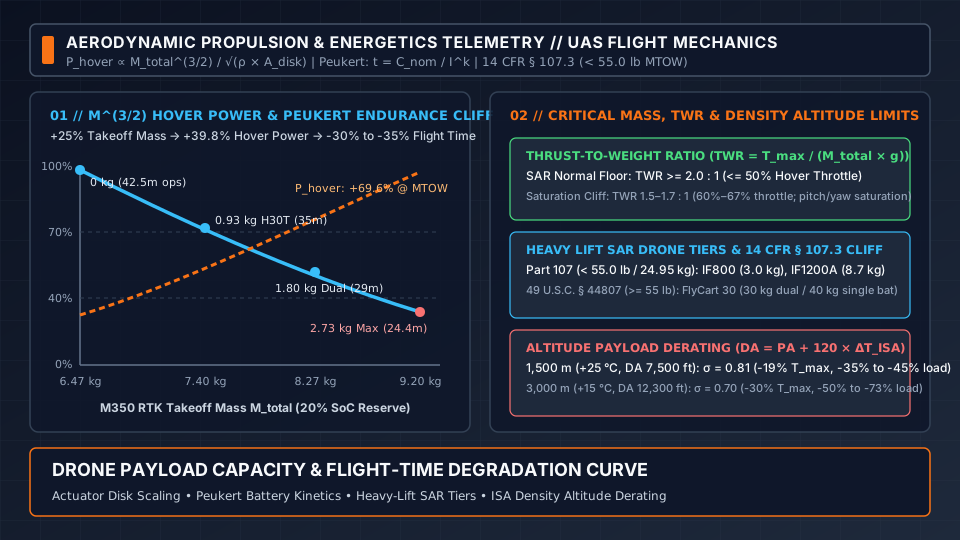
How drone payload capacity cuts flight time under the M^(3/2) hover power law, Peukert battery loss, heavy lift SAR drone curves, the 55 lb Part 107 cliff, and altitude payload derating.
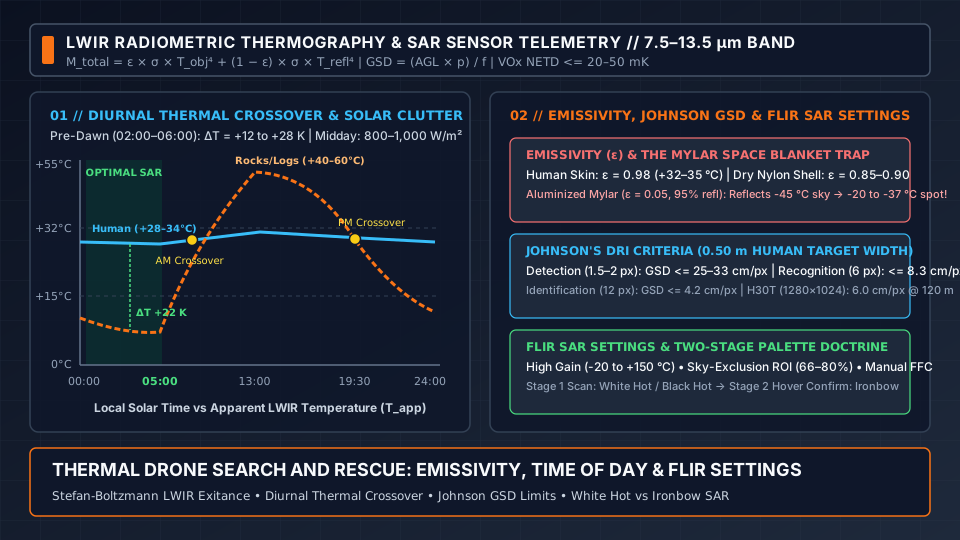
How thermal drone search and rescue works: LWIR emissivity, Mylar space blanket reflection, diurnal thermal crossover, Johnson GSD criteria, FLIR SAR settings, and White Hot vs Ironbow SAR palettes.
A second radio inside 2400–2483.5 MHz fails with the first. Part 88 keeps 5040–5050 MHz for control only. A 5800 MHz backup adds 7.66 dB of free-space loss.
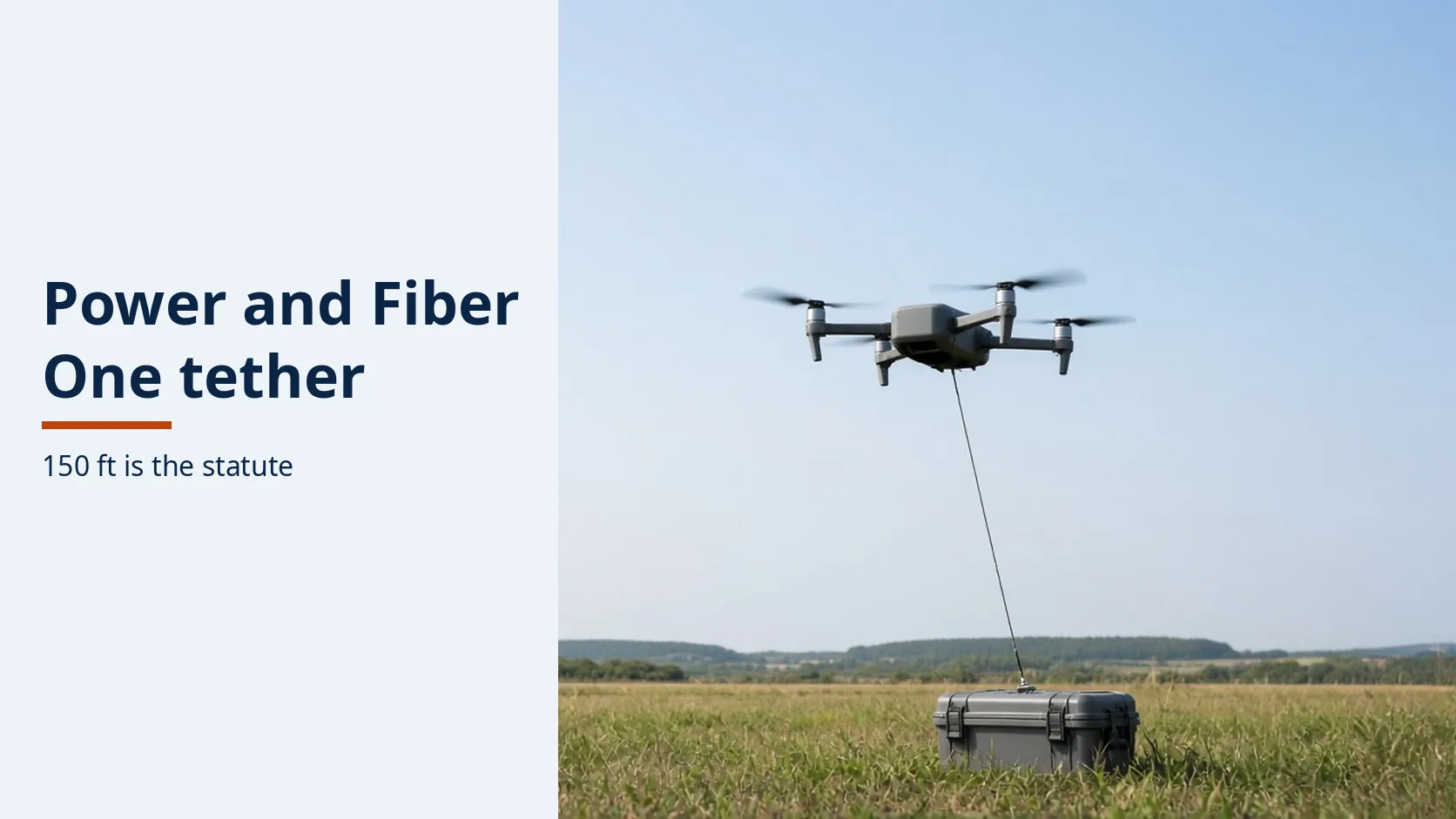
A dark fiber is not a power failure. Match the sheet's watts and altitude to the 150-foot public-safety line before either number is reused.
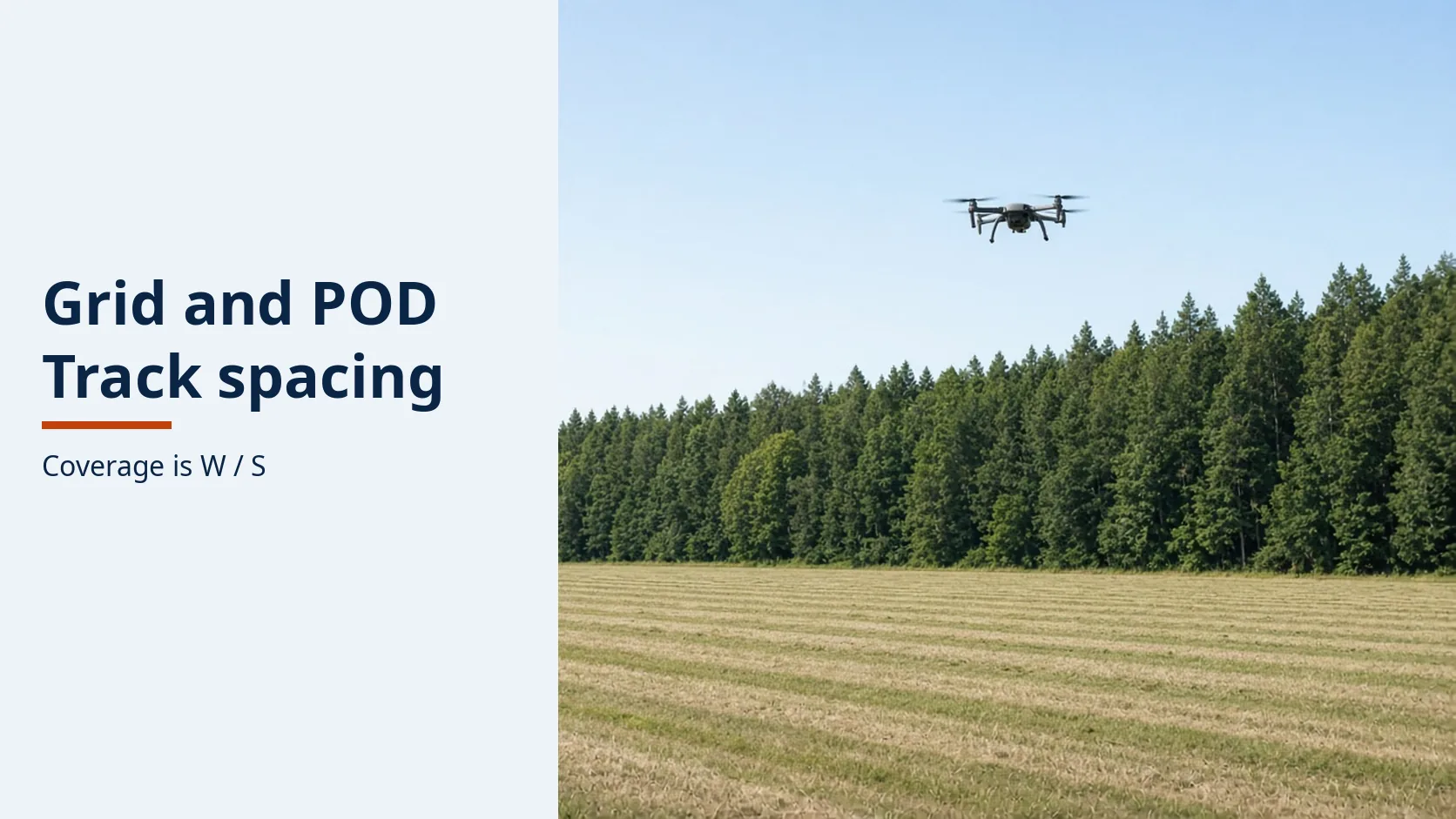
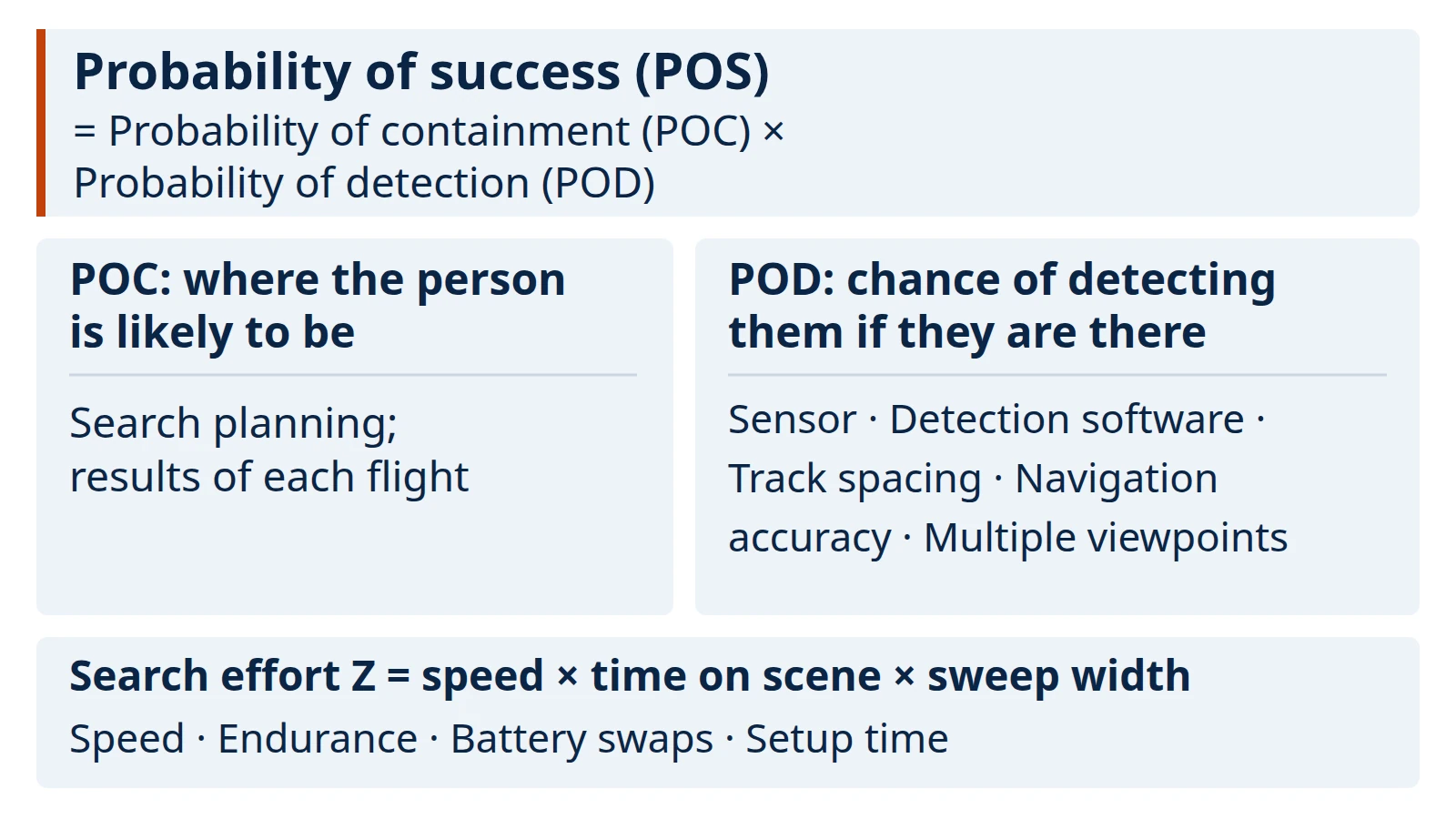
A grid the aircraft does not fly is a gap. IAMSAR sets coverage as sweep width over track spacing, and the pattern has to match how well the datum is known.
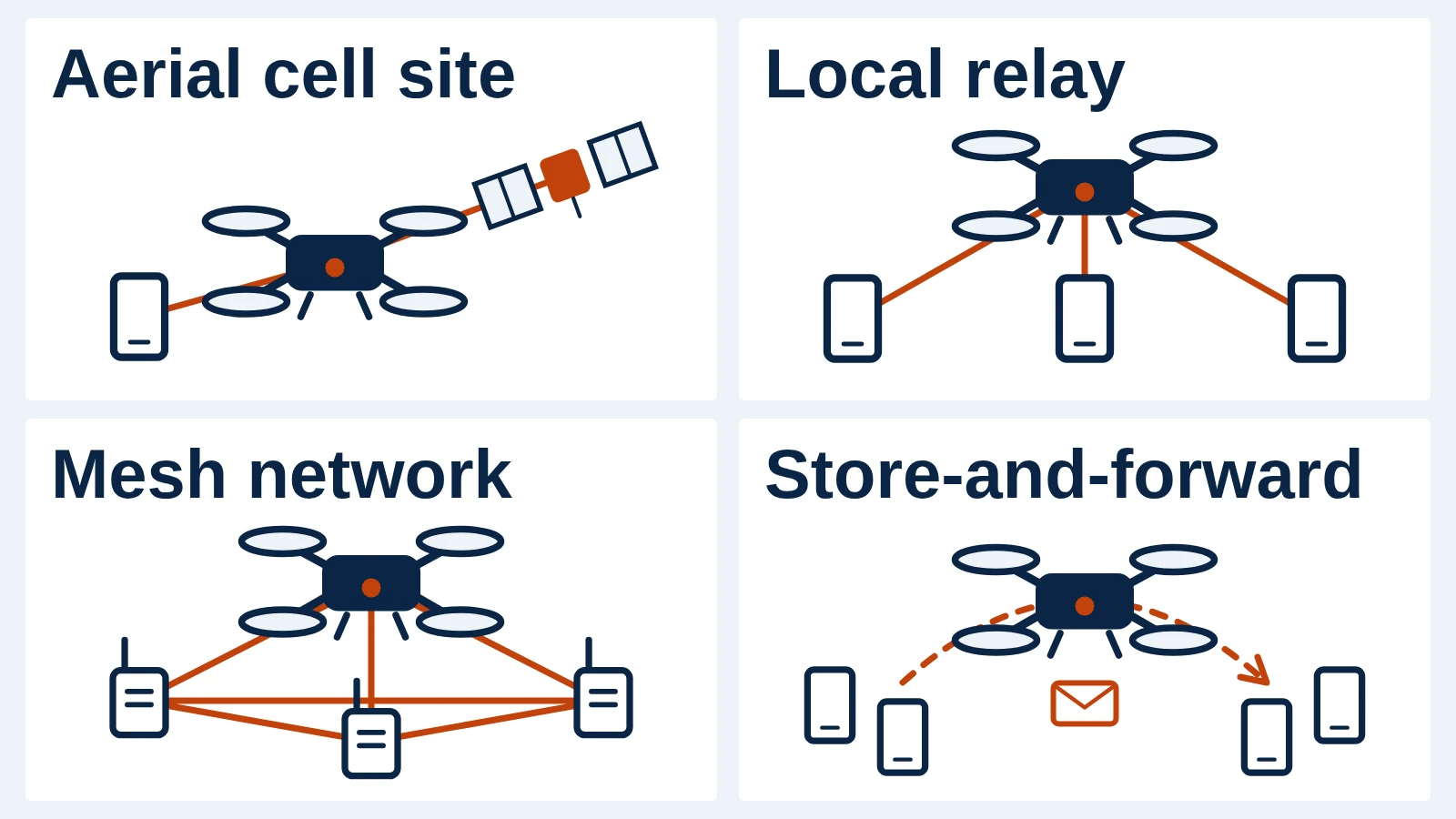
How drones relay data for responders without cell service: aerial cell sites, local and mesh relays, store-and-forward, tethered or free-flying, and what limits each one.
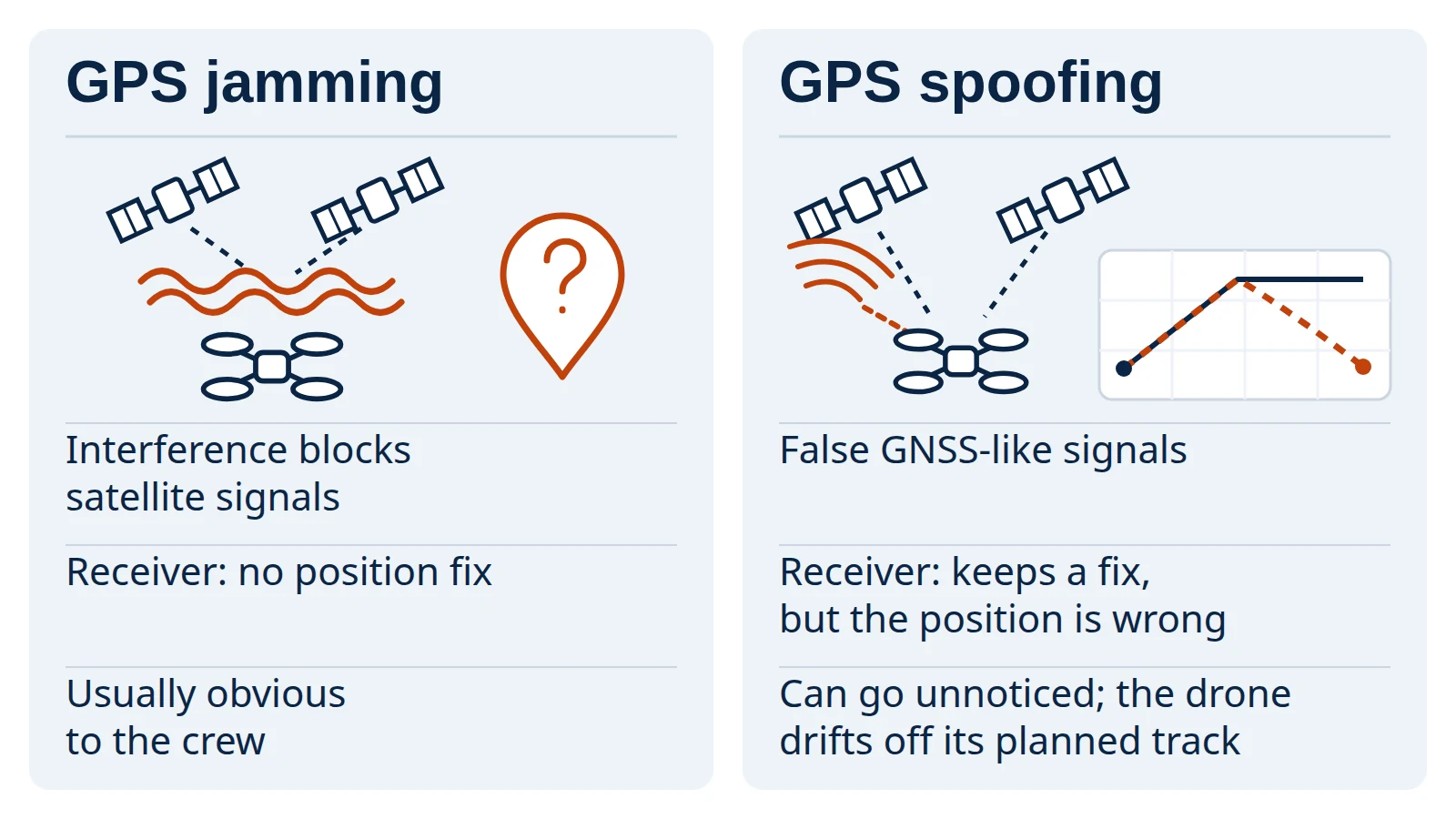
What GPS jamming and spoofing do to a drone, how operators can detect them, which public safeguards reduce the risk, and why jamming a drone yourself is illegal in the U.S.
What optimizing a drone search and rescue flight actually changes, why forest canopy makes it hard, which levers help, and how to check a detection claim before relying on it.
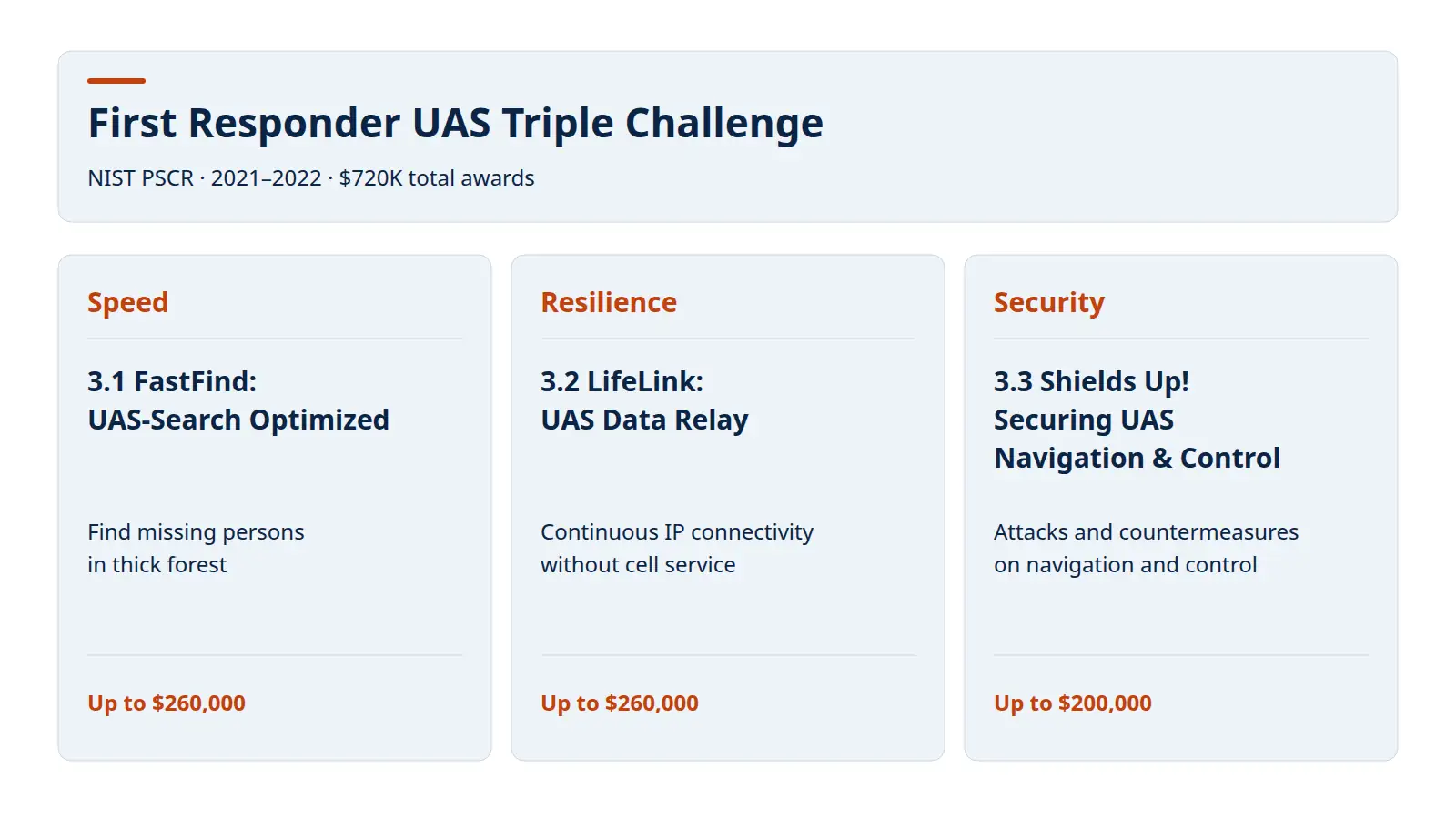
A sourced record of NIST PSCR's First Responder UAS Triple Challenge: who ran it, what the three challenges asked for, the $720K award pool, the FAQ rules and where results are.