Choose a public safety drone by writing the mission configuration and acceptance checks before comparing bids. Request a loaded-hover demonstration, identify the camera and accessory configuration, check protection ratings by component, and document the Remote ID registration route.
For law enforcement and fire department drone specs, use the manufacturer benchmarks below to structure the questions in your procurement file. Then complete the checklist at the end with your own mission requirements.
Quick specifications: read the test conditions
Flight-time benchmark
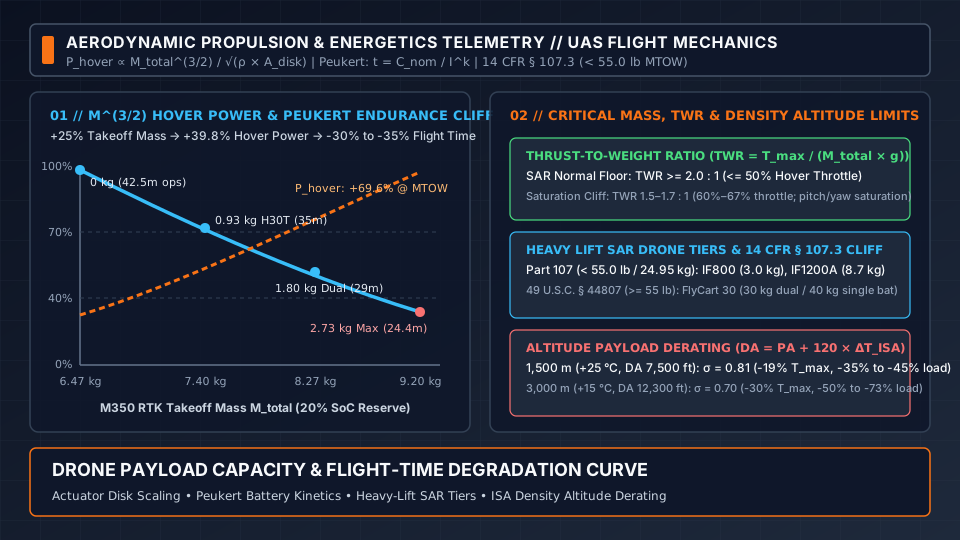
The Matrice 350 RTK maximum flight time is 55 minutes. Flight-time test speed was approximately 8 m/s. The maximum-flight-time test used no payload in a windless environment. The flight-time test continued until the battery level reached 0%. Actual usage time may vary with flight mode, accessories, and environment.
Keep those conditions beside the headline figure in the bid comparison. For the demonstration, specify the installed camera, accessories, propellers, battery configuration, weather observations, return plan, and landing endpoint. Ask for the resulting hover record with that configuration.
Hover and flight specifications
Matrice 30 Series
Maximum flight time and hover time were tested in a laboratory and are reference values.| Measurement | Published specification |
|---|---|
| Hover | Maximum hover time is 36 min with 1671 propellers. |
| Hover | Maximum hover time is 34 min with 1676 propellers. |
| Flight | Maximum flight time is 41 min with 1671 propellers. |
| Flight | Maximum flight time is 38 min with 1676 propellers. |
Carry the propeller identifier into the evaluation record. Ask bidders to label flight and hover results separately, alongside the conditions used for each measurement.
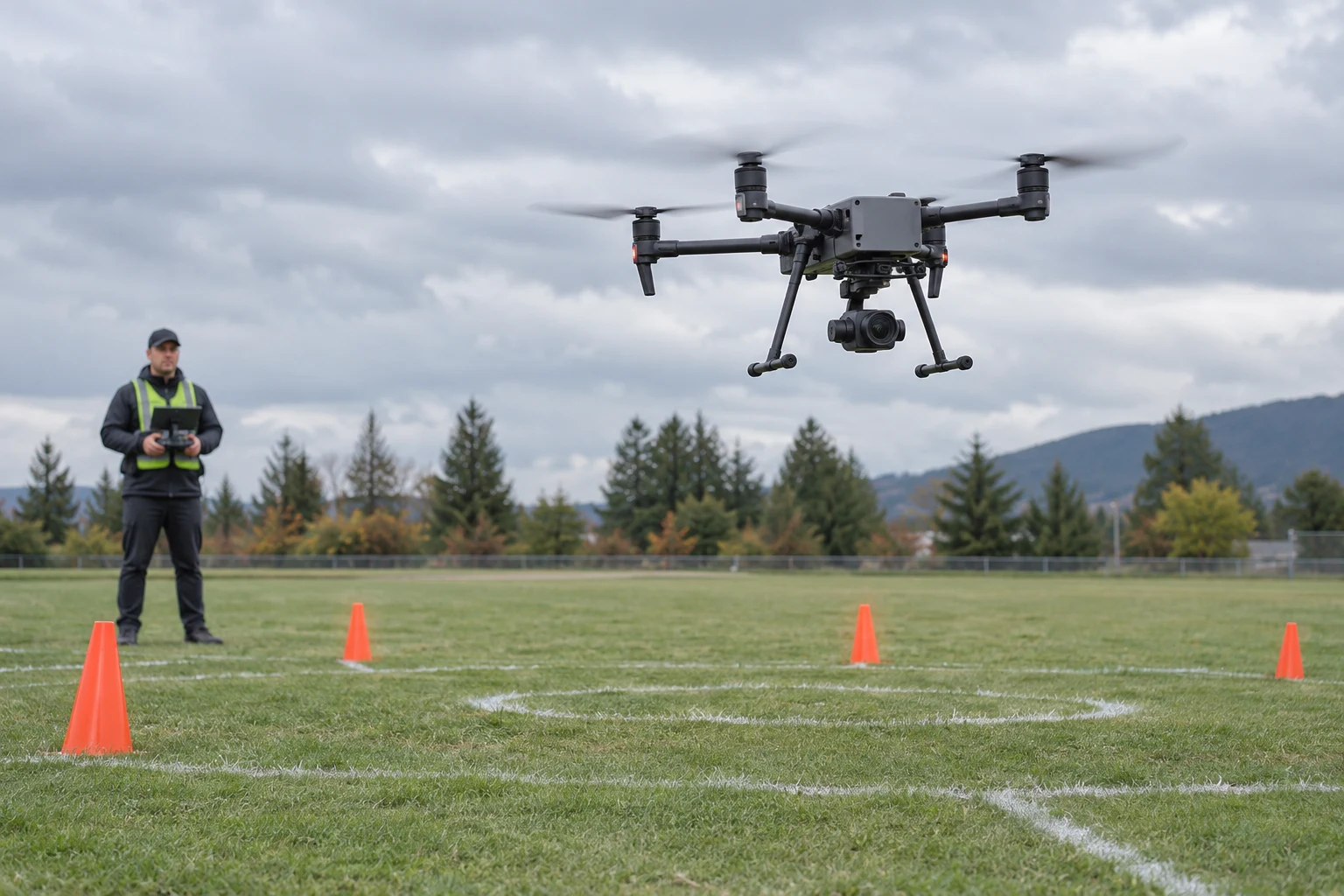
Loaded hover: define the acceptance record
Set the acceptance target around your mission. Record departure, arrival at the observation position, the end of observation, and landing as separate events; retain the flight log with the configuration sheet.
NIST test methods allow objective measurement and comparison of system capabilities and remote pilot proficiency. Organizations set their own acceptable system and pilot performance thresholds for their airspace, environment and missions.
Use these questions when planning the demonstration:
- Which camera, mounts, and accessories will be installed and operating?
- What battery and propeller configuration will be used?
- What weather observations and flight conditions will be recorded?
- What return and landing reserve will the department require?
- What observation task must the operator complete during the hover?
Return and payload checks
For the Matrice 350 RTK:
The Matrice 350 RTK calculates whether it has enough power to fly to the Home Point from its current location. If Matrice 350 RTK return-to-home is canceled after the low-battery warning, the Intelligent Flight Battery may lack enough power for a safe landing. Changing Matrice 350 RTK payloads shifts its center of gravity. Recalibration of the Matrice 350 RTK center of gravity is required when a new payload is installed.
Include the calibration procedure and return-warning behavior in the demonstration agenda. Record the configuration used for each result before accepting it into the bid comparison.
Dual EO/IR gimbal and accessory configuration
Write separate procurement questions for the camera channels and the payload mounts. Ask which visible-light and thermal functions are included in the offered camera, which accessories will be fitted, and which combination will be demonstrated.
Gimbal mounting benchmark
For the Matrice 350 RTK:
A supported Matrice 350 RTK configuration is dual downward gimbals plus a single upward gimbal. On Matrice 350 RTK, total power across the four ports is limited to 180 W.
Request the proposed mounting arrangement and combined accessory power budget. Include the installation and calibration steps in the delivery checklist.
Thermal-camera benchmark
For the Matrice series used in the hover table:
The thermal camera is specified for M30T/M30T EU only.
| Camera parameter | Published specification |
|---|---|
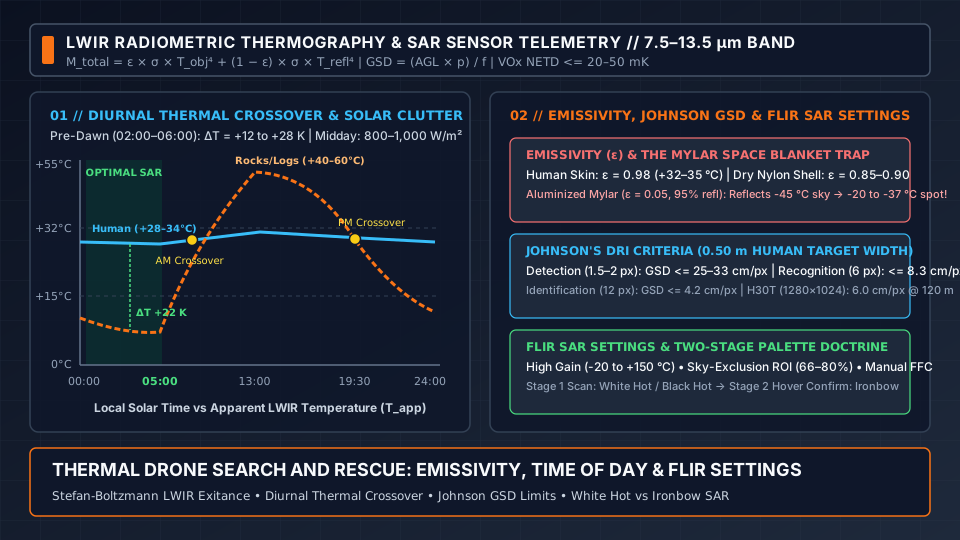
| Normal-mode video | Normal-mode thermal video resolution is 640×512. |
| Super-resolution video | Infrared image super-resolution mode is 1280×1024. |
| Temperature measurement | Temperature measurement methods are spot metering and area measurement. |
Ask for sample output from the exact camera mode proposed for the mission. Keep the mode name in the acceptance record and specify the observation task before comparing the images.
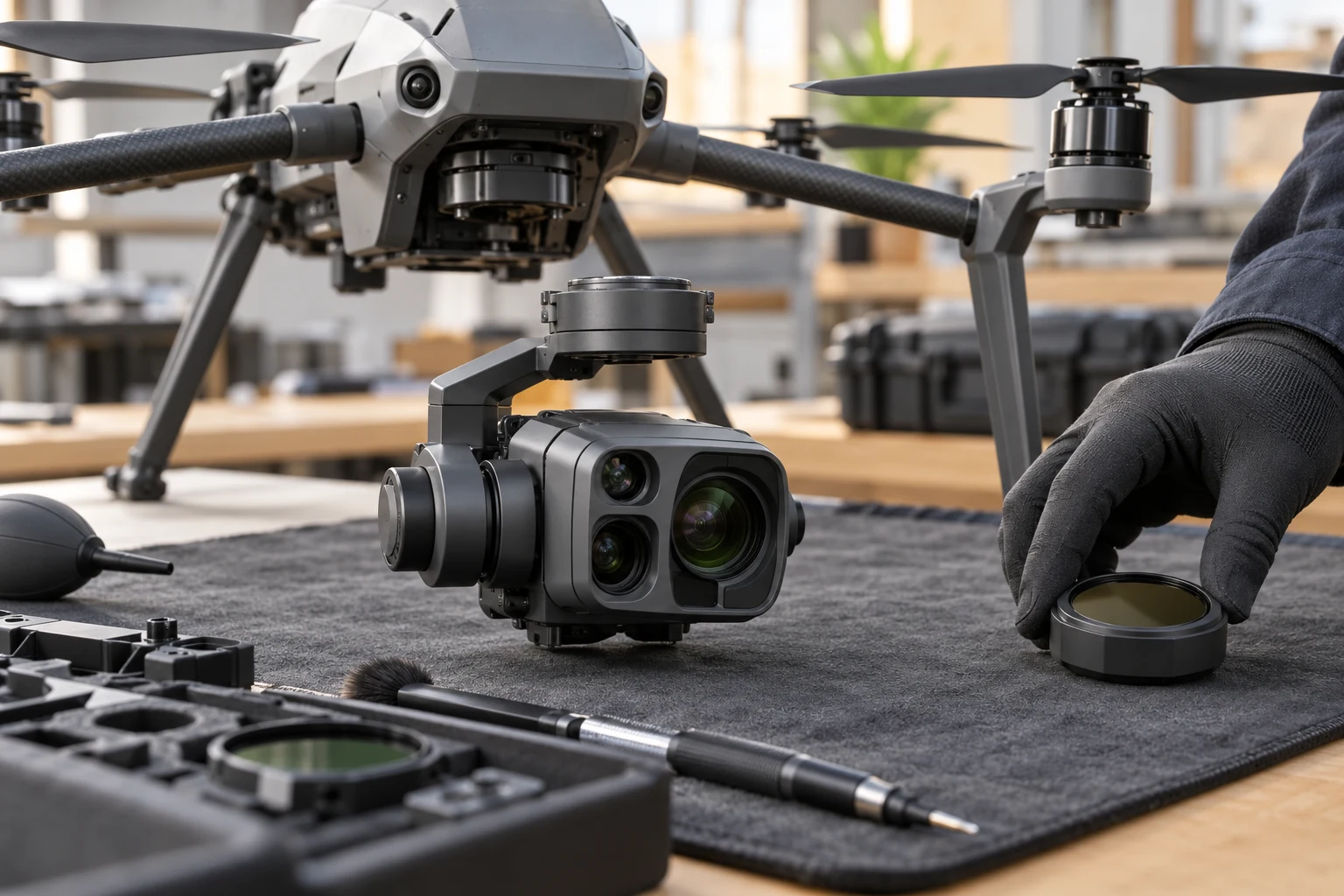
IP rating: check aircraft and controller separately
List each component in the procurement file and retain its operating instructions with its protection rating.
The M350 RTK achieves an IP55 protection rating under stable laboratory conditions with TB65 Intelligent Flight Batteries. The protection rating is not permanent and may reduce after long-term use. The DJI RC Plus remote controller has an IP54 protection rating.
Protection terminology
IP 5x is described as dust protected for the vacuum test. IP x5 is described as protected against water jets. IP x4 is described as protected against splashed water. IP 6x is described as dust tight.
Aircraft preparation and weather limits
For the Matrice airframe benchmark:
Matrice 350 RTK maximum wind resistance is 12 m/s. For Matrice 350 RTK: do not fly when rainfall exceeds 100 mm / 24 h. Incorrectly attached port covers are listed among circumstances in which the Matrice 350 RTK does not achieve its IP55 protection rating. For Matrice 350 RTK, battery ports, battery compartment ports, battery surfaces, and battery compartment surfaces must be dry before battery insertion.
Include port-cover inspection and dry-battery preparation in the equipment handover. Keep the aircraft, camera, controller, and accessory instructions in the same field equipment file.
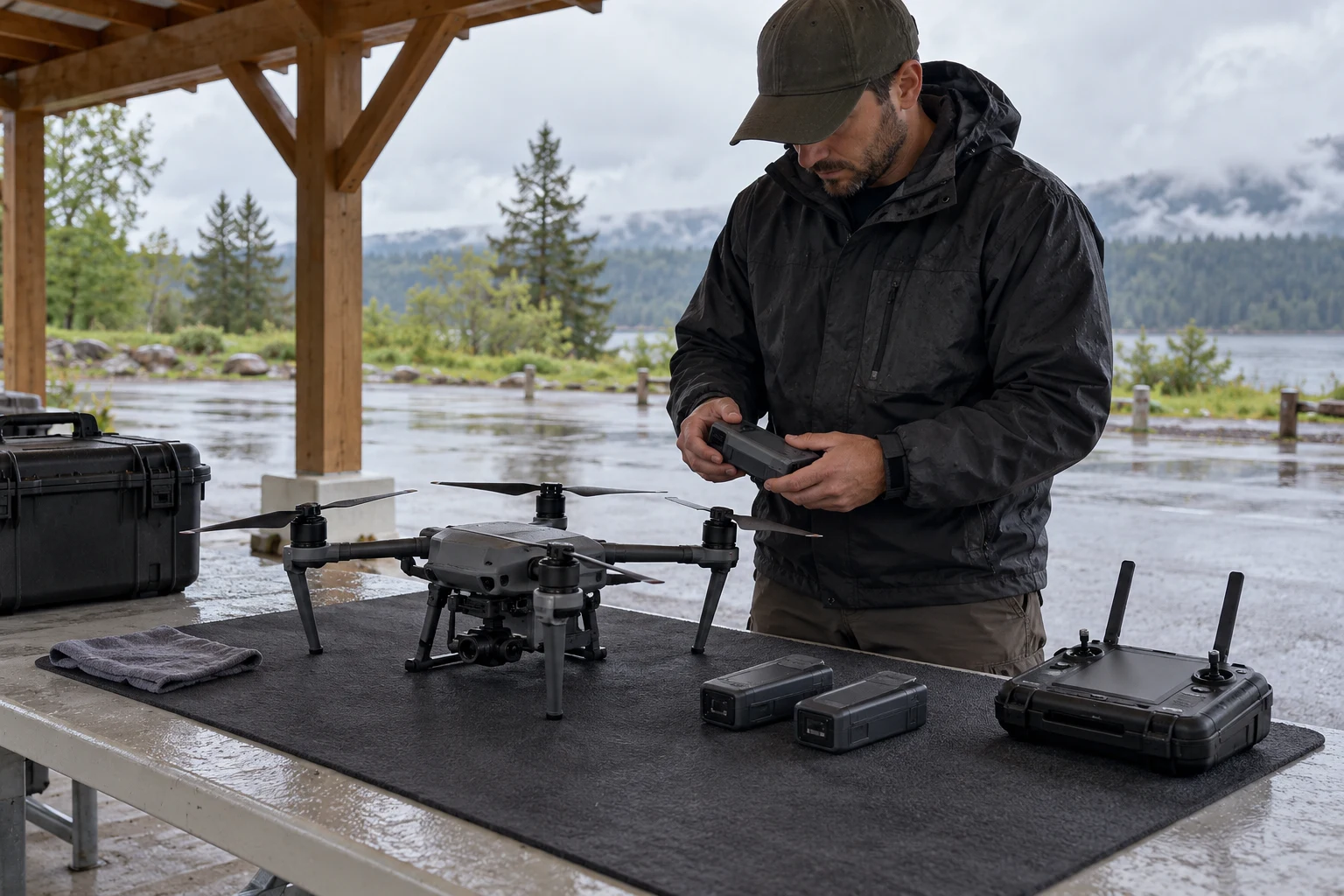
Battery turnaround after landing
Ask for a ground demonstration of the battery replacement procedure as part of delivery acceptance. For the Matrice airframe benchmark:
After landing, Matrice 350 RTK battery replacement does not require powering off the aircraft. For Matrice 350 RTK, insert a fully charged battery and wait for three seconds before inserting another.
Record the complete turnaround sequence, including preparation for the next flight. Specify the battery inventory and charging arrangement in the procurement worksheet.
Remote ID: identify the registration route
For the US registration check, start with the offered aircraft or module and its compliance documentation.
A Standard Remote ID drone is produced with built-in FAA Remote ID broadcast capabilities. Standard Remote ID broadcasts identification and location information about the drone and control station. A broadcast module broadcasts identification and location information about the drone and its take-off location. Pilots using a Remote ID broadcast module must be able to see their drone at all times during flight. Check whether the drone or broadcast module is on an FAA-accepted Remote ID Declaration of Compliance. Enter the Remote ID serial number during device registration.
Carry the device identity into the fleet record. Continue with the Remote ID serial-number and fleet-registration guide when preparing the registration file.
Public safety drone procurement checklist
Copy these prompts into the bid request and complete them for each offered configuration.
| Decision | Record to request |
|---|---|
| Mission | Observation task, operating environment, required on-scene duration, and department acceptance target. |
| Loaded hover | Installed payloads, active accessories, propellers, batteries, flight log, weather observations, return plan, and landing endpoint. |
| Camera and mounts | Exact camera variant, visible-light and thermal modes, sample outputs, mount arrangement, accessory power budget, and calibration procedure. |
| Protection | Separate aircraft, camera, controller, and accessory ratings with their operating and preparation instructions. |
| Turnaround | Ground battery-change demonstration, battery inventory, charging arrangement, and next-flight preparation. |
| Registration | Offered device identity, accepted declaration check, Remote ID serial number, and fleet registration record. |
Use the completed worksheet to set the demonstration agenda and document the purchase decision. For the department approval process, continue with the first-responder policy review matrix. Explore the UAS Triple Challenge archive for the site’s first-responder competition coverage.
Sources
- DJI — Matrice 350 RTK User Manual.
- DJI — Matrice 30 Series User Manual.
- Intertek — Ingress Protection Testing.
- NIST — Aerial Drone Tests FAQ.
- FAA — Remote Identification of Drones.